Why lead generation is moving beyond interruption
Ads and cold DMs still have a place, but they are no longer the only way to build pipeline. Paid channels are crowded, costs can rise fast, and cold outreach often starts from a weak position: you are asking for attention before the buyer has shown any intent.
A better path is to find people who are already talking about the problem you solve. That is the core of marketing lead generation without ads or cold DMs: monitor public conversations, identify buying intent, reply with useful context, and earn the next step.
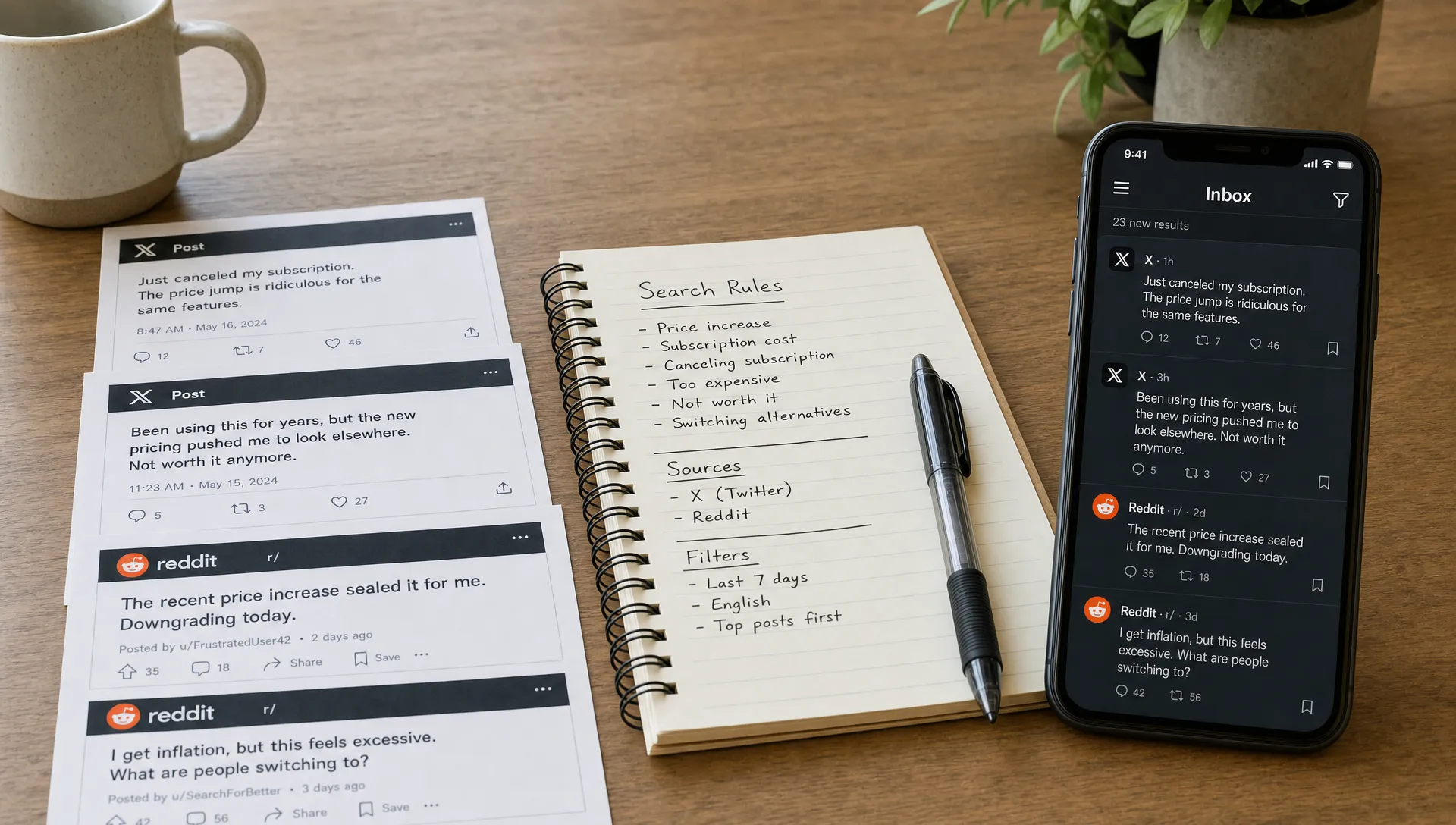
This approach works especially well on X and Reddit because both platforms are full of visible intent. People ask for recommendations, compare tools, vent about broken workflows, describe urgent problems, and share what they are trying next. If you can show up at the right moment with a genuinely helpful answer, you are not interrupting. You are joining a conversation that already exists.
What “without ads or cold DMs” actually means
This is not a passive “post and pray” content strategy. It is also not a loophole for spamming comment sections. The goal is to build a repeatable system for finding high-intent conversations and responding in a way that creates trust.
In practice, conversation-led lead generation has four parts:
- Monitoring the places your buyers already talk, especially X and Reddit.
- Filtering for posts that show real intent, not just broad interest.
- Replying with helpful, specific advice before pitching anything.
- Moving the conversation forward only when there is a natural reason to do so.
The mindset shift is important. You are not trying to convince random people to care. You are trying to be discoverable when someone already cares.
For example, a founder asking “What are people using instead of Intercom for early-stage SaaS?” is much more valuable than a list of 5,000 generic SaaS founders. The post gives you context, timing, pain, category awareness, and a reason to respond.
The intent signals worth tracking
Not every mention is a lead. A good marketing lead generation system separates noise from buying intent.
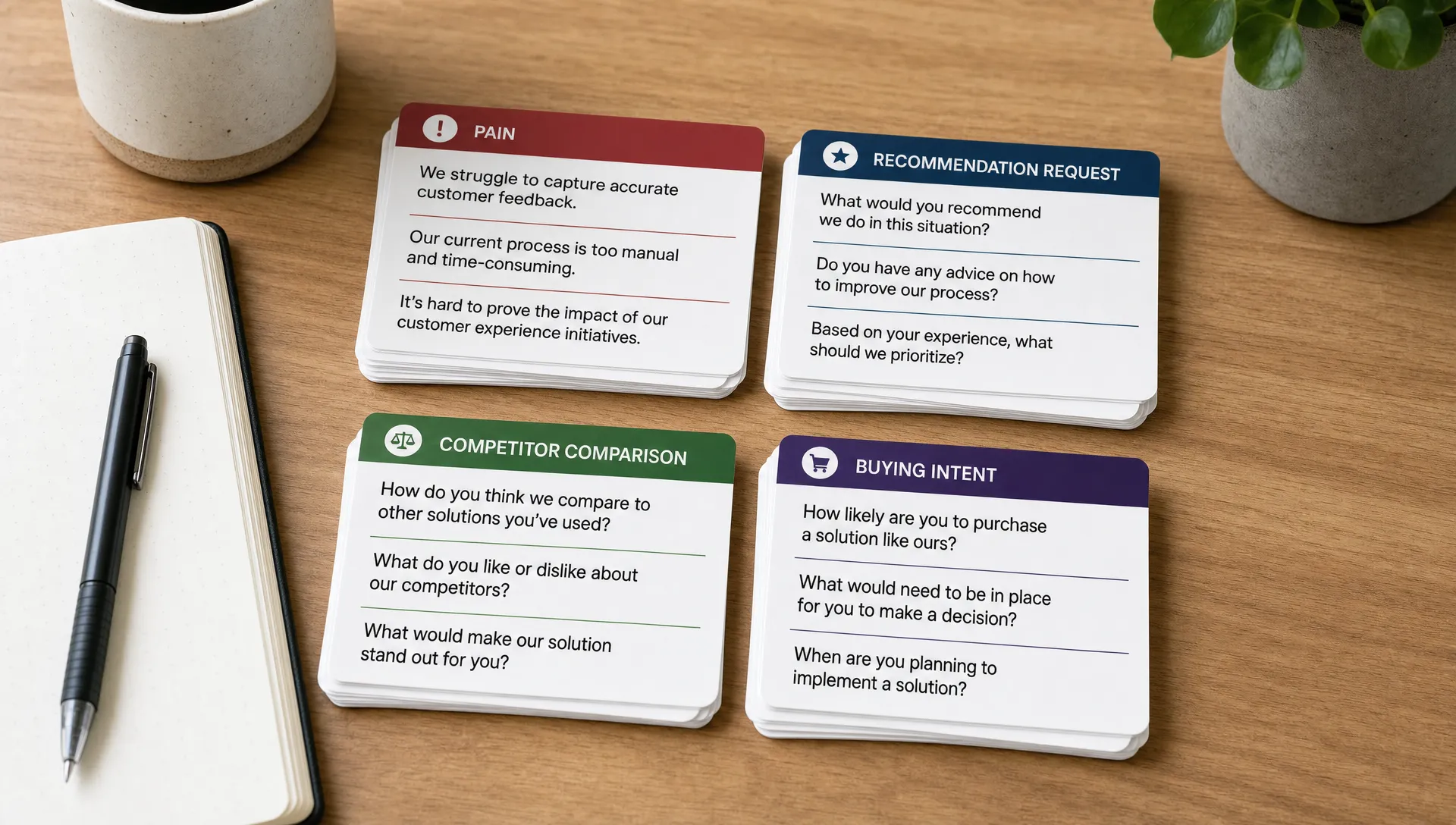
The most useful signals usually fall into a few categories:
| Intent signal | What it looks like | Why it matters | Best response angle |
|---|---|---|---|
| Recommendation request | “What tool should I use for…” | The person is actively evaluating options. | Share a short framework and mention your product only if relevant. |
| Pain or frustration | “I’m tired of dealing with…” | The problem is current and emotionally charged. | Diagnose the issue and offer a practical next step. |
| Competitor comparison | “Has anyone tried X vs Y?” | The buyer already understands the category. | Explain tradeoffs honestly, including where you are not the best fit. |
| Workflow question | “How do you handle…” | The person may need education before buying. | Teach the process and invite follow-up if they want examples. |
| Migration trigger | “We’re moving off…” | There may be urgency and budget. | Ask about constraints, then offer a relevant alternative. |
The key is to track moments, not just keywords. A keyword like “CRM” could be research, complaint, hiring, education, or purchase intent. A phrase like “looking for a CRM that works for a 3-person sales team” is much more actionable.
Why X and Reddit are different, and why both matter
X is fast. Conversations move quickly, and timely replies can get seen by the original poster plus everyone else following the thread. It is especially useful for founders, operators, marketers, creators, and technical audiences who discuss tools and workflows in public.
Reddit is deeper. Threads often contain longer context, more detailed objections, and candid comparisons. People ask for honest recommendations from peers, which makes Reddit valuable for understanding buying criteria. It is also less forgiving of lazy promotion, so the quality bar is higher.
Used together, X and Reddit give you both real-time urgency and high-context buyer research. X helps you catch fresh demand. Reddit helps you understand the language, objections, and decision criteria behind that demand.
If your strategy is heavily Reddit-specific, a dedicated platform like Redditor AI can help teams monitor relevant Reddit conversations and turn them into customer opportunities. If you want one workflow across both X and Reddit, Pounce is built around surfacing high-intent posts from both channels so you can review, reply, and build relationships quickly.
For a deeper Reddit workflow, Pounce also has a practical guide on turning a Reddit post into qualified leads without sounding spammy.
A 15-minute daily workflow for conversation-led leads
The biggest mistake is treating social lead generation like endless scrolling. You do not need to live in feeds. You need a focused daily session.
Here is a simple structure that works for founders, marketers, and small teams.
Set rules around pain, not just product terms
Start with the problem your product solves. If you sell analytics software, do not only track “analytics tool.” Track phrases like “can’t see where users drop off,” “GA4 is confusing,” “product metrics dashboard,” or “how do you track activation.”
Good search rules include a mix of:
- Category terms, such as “lead gen tool” or “social listening software.”
- Pain phrases, such as “cold outreach isn’t working.”
- Alternative searches, such as “instead of Apollo” or “replacement for.”
- Buying phrases, such as “looking for,” “recommend,” “best tool,” or “what do you use.”
Pounce supports customizable search rules, so you can tune monitoring around the exact conversations that matter to your market.
Filter for fit before you reply
A post can show intent and still be a bad lead. Before replying, quickly check whether the person matches your ideal customer profile.
Look at the context: company stage, use case, urgency, budget clues, current tools, and whether your product can genuinely help. If the fit is weak, you can still be useful, but do not force a pitch.
This is where AI-powered filtering helps. Pounce is designed to surface relevant posts into an inbox, reducing the time you spend digging through irrelevant mentions.
Reply in public first
Public replies build trust because other people can judge the value of your answer. A strong reply usually does three things: acknowledges the situation, gives a concrete insight, and offers a low-pressure next step.
Instead of saying, “We built a tool for this, DM me,” try something like:
“Sounds like the hard part is not finding more leads, but finding the ones already showing intent. I’d start by tracking recommendation requests and competitor complaint threads, then only replying when you can add specific context. Happy to share a few search patterns if useful.”
That reply is useful even if the person never becomes a customer. It also gives them a reason to continue.
Move to a private conversation with permission
Cold DMs feel intrusive because they skip consent. Conversation-led lead generation earns permission first.
A good transition sounds like this:
“If helpful, I can send you the search rules we use for this.”
Or:
“I can take a quick look at your use case and tell you if this approach would work.”
This keeps the buyer in control. You are not pushing them into a funnel. You are offering a relevant next step based on the conversation they started.
Track activity and outcomes
A repeatable system needs feedback. Pounce includes session stats tracking and daily reply goals, which helps turn this from occasional browsing into a measurable channel.
Useful metrics include:
| Metric | What it tells you | What to improve |
|---|---|---|
| Relevant posts found | Whether your rules are broad enough. | Add more pain phrases or communities. |
| Reply rate | Whether you are engaging consistently. | Set a daily reply target. |
| Positive responses | Whether your replies are useful. | Make replies more specific and less promotional. |
| Conversations started | Whether public replies create momentum. | Improve your permission-based CTA. |
| Qualified leads | Whether intent matches your ICP. | Tighten filtering rules and lead criteria. |
Over time, the system should get sharper. Pounce can help with automatic filter improvement, but you should still review what converts. Your best-performing replies and search rules are market research, not just lead generation assets.
How to write replies that generate leads without sounding salesy
The reply is the channel. If your answer sounds generic, the opportunity disappears.
The best replies are specific to the post. They mention details from the original question, explain tradeoffs, and avoid pretending your product is always the answer.
Here are four reply styles that work well:
| Situation | Reply style | Example opening |
|---|---|---|
| Someone asks for tool recommendations | Helpful comparison | “I’d evaluate this based on team size, setup time, and whether you need…” |
| Someone complains about a workflow | Diagnosis | “This usually happens when the process depends on manual checks instead of…” |
| Someone compares competitors | Honest tradeoff | “The main difference is likely not features, but how much control you want over…” |
| Someone asks how to solve a problem | Mini playbook | “I’d do this in three steps: define the signal, filter for fit, then reply with…” |
Notice that none of these start with a pitch. The pitch, if it belongs at all, comes after the useful part.
A simple structure is:
- Acknowledge the exact problem.
- Share one practical insight.
- Mention your product only if it directly fits.
- Offer a next step that does not pressure the person.
For example:
“Totally get this. The hard part is that keyword alerts create too much noise unless you filter for intent. We built Pounce for this exact workflow across X and Reddit, but even manually, I’d start by tracking phrases like ‘looking for,’ ‘recommend,’ and competitor complaints. If useful, I can share a few examples.”
That is a reply, not a cold DM. It is contextual, transparent, and useful.
The role of AI in modern marketing lead generation
AI should not replace judgment. It should remove the manual work that prevents you from showing up consistently.
For this channel, AI is most useful for:
- Finding relevant posts across noisy feeds.
- Filtering out weak-fit conversations.
- Drafting replies you can edit quickly.
- Learning which rules produce better leads.
- Keeping you focused during short daily sessions.
Pounce uses AI to monitor X and Reddit in real time, filter for relevant conversations, and assist with reply drafting. That means you can spend less time searching and more time doing the part that actually builds trust: engaging with the right people.
The human still matters. You know your market, product constraints, customer stories, and what you can honestly promise. AI can get you to the right conversation faster, but your judgment determines whether the reply earns a response.
Common mistakes to avoid
Conversation-led lead generation is powerful, but it can go wrong quickly if you treat it like another spray-and-pray channel.
Mistake 1: Replying to everything
More replies do not automatically mean more leads. If the post is a poor fit, too old, too vague, or outside your expertise, skip it. Quality matters more than volume.
Mistake 2: Pitching before helping
A public reply that immediately says “try my product” feels like an ad in disguise. Give value first. If the product is relevant, connect it to the specific problem.
Mistake 3: Ignoring community norms
Reddit communities can be especially sensitive to promotion. Read the rules, understand the tone, and contribute like a member, not a drive-by marketer.
Mistake 4: Measuring only direct conversions
Some replies will not convert immediately, but they can still create profile visits, referrals, followers, and future inbound. Track qualified conversations as well as demos or signups.
Mistake 5: Giving up too early
This channel compounds. Your first week may mostly teach you which conversations matter. By week four, your filters, reply patterns, and positioning should be sharper.
For a broader channel plan, see Pounce’s guide to building a lead generation strategy for X and Reddit.
A simple weekly operating system
If you want this to become a reliable lead source, treat it like a small operating system, not a random task.
On Monday, review the conversations that produced replies last week. Identify which search rules found them. Keep the rules that found good-fit posts and remove the ones that created noise.
From Tuesday to Thursday, run short daily sessions. Open your inbox, review the best posts, draft replies, edit for specificity, and respond. Aim for consistency over intensity.
On Friday, review outcomes. Which replies got positive responses? Which posts became qualified conversations? Which objections appeared repeatedly? Use those insights to improve positioning, content, and product messaging.
This is why social conversations are valuable beyond immediate pipeline. They reveal what buyers actually say when they are not filling out a form or sitting on a sales call.
When this strategy is the right fit
Marketing lead generation without ads or cold DMs works best when your buyers publicly discuss their problems. It is especially strong for B2B SaaS, developer tools, creator tools, agencies, consultants, communities, and niche services.
It may be less effective if your buyers never talk publicly about the problem, the purchase is highly confidential, or your product category requires long procurement with little public research.
Even then, the method can still help with market research. Public conversations can reveal pain points, competitor gaps, and language you can use in ads, content, landing pages, and sales calls.
The best sign this channel will work is simple: you can find 10 to 20 public conversations per week where people describe the problem you solve in their own words.
FAQ
Can marketing lead generation work without ads?
Yes, if your buyers discuss their problems publicly. Instead of paying for attention, you monitor high-intent conversations on platforms like X and Reddit, reply with useful context, and move to a sales conversation only when there is genuine fit.
Is replying to posts just another form of cold outreach?
Not if the reply is contextual and public. Cold outreach usually interrupts someone who has not asked for help. Conversation-led outreach starts from a post where the person has already expressed a problem, question, or buying signal.
How many replies should I send per day?
Start with a realistic goal, such as 5 to 15 high-quality replies per day. The exact number matters less than relevance. One thoughtful reply to a high-intent post can outperform dozens of generic comments.
Should I mention my product in every reply?
No. Mention your product only when it directly fits the problem. Many of your best replies should teach, clarify, or ask a smart follow-up question. Trust comes before conversion.
Why use a tool instead of searching manually?
Manual searching works at first, but it becomes inconsistent and noisy. A tool like Pounce can monitor X and Reddit in real time, filter relevant posts into an inbox, assist with reply drafting, and help you stay consistent with short daily sessions.
Build pipeline from conversations already happening
You do not need to choose between expensive ads and awkward cold DMs. If your buyers are already asking questions, comparing tools, and describing pain on X and Reddit, you can build a lead generation system around those signals.
The playbook is simple: find intent, qualify fit, reply with value, ask permission for the next step, and track what works.
If you want to make that workflow faster, Pounce helps you monitor X and Reddit, surface high-intent leads, draft better replies, and stay focused in quick daily sessions.